What to Look for in a Youth Motivational Speaker: 7 Questions Before You Book
There are a lot of people calling themselves youth motivational speakers. That label doesn't tell you much. What you actually need to know, before you commit your school's budget, your students' time, and your professional credibility to someone, is whether this specific person will make a genuine difference in the room.
These seven questions will tell you more than any speaker's website or promotional reel.
1. "What do students walk away with that they can use on Monday morning?"
This is the most important question in your vetting conversation. A speaker who answers with feelings ("inspired," "motivated," "empowered") is telling you they deliver an experience. A speaker who answers with a tool, a framework, a decision-point, or a specific phrase is telling you they deliver a result.
Results outlast experiences. A student who leaves an assembly with a sentence they'll repeat in their head when they face a hard choice is a student whose behavior has a chance of actually changing.
2. "Can I see video of you speaking to students who look like mine?"
A speaker who crushes it with college students might land flat with middle schoolers. A speaker who speaks fluently to high-achieving suburban students might not connect at all in a Title I school with a predominantly low-income population. The stakes of making that mistake in front of 600 students are real.
Watch video. If a speaker doesn't have video of them with a comparable audience, that tells you something. Professional youth speakers film their programs. They're proud of the evidence.
3. "What's your background, have you actually lived what you're talking about?"
Young people are experts at detecting the gap between what someone says and what they've actually experienced. A speaker who talks about overcoming poverty but grew up comfortable, or who talks about making hard choices but never actually faced one with real consequences, students feel that inauthenticity immediately.
The most effective youth motivational speakers are people for whom the story is real. They didn't research adversity. They lived it. That specificity, the name of the neighborhood, the specific moment of the choice, the exact feeling of the doubt, is what makes a message stick.
4. "How do you handle a disruptive crowd?"
Every school has them, the students who come in determined to perform for their peers instead of listening. A youth speaker who has worked in schools long enough has a strategy for this. They don't lose the room, and they don't humiliate the student. Ask directly what that strategy looks like. Experienced school speakers will have a specific answer. Speakers new to the school environment often won't.
5. "Do you customize for our specific school, or deliver a standard program?"
There's a version of school assembly speaking that is, essentially, a touring show. The speaker arrives, delivers a fixed program, leaves. It's efficient for them. It's generic for your students.
The speakers who make the most consistent impact send questionnaires before they arrive. They ask about the school's challenges, the student population, the specific goals of the administration. They arrive knowing the context. They reference it. Students notice.
6. "Can I speak with two principals or event coordinators who've booked you in the last year?"
Reference checks are standard in hiring. They should be standard in speaker booking. Ask for contacts who can speak specifically to: how the speaker prepared, how they handled the actual event, and what the measurable outcome was. A speaker who declines to provide references, or who provides them only after significant pushing, is telling you something.
7. "What's your cancellation and emergency policy?"
You've organized an assembly for 800 students. The speaker's flight gets canceled the night before. What happens? Do they have a backup plan? Do they have colleagues who can substitute? What are you entitled to under the contract?
Professional speakers have thought about this and have documented policies. Speakers who haven't thought about it tend to go silent when the crisis hits.
The Bottom Line
The youth motivational speaker you choose is going to stand in front of students who are at the most formative moment of their lives and tell them something about who they are and what's possible for them. That's not a vendor decision. It's a cultural decision. Take the time to ask the right questions, and you'll know exactly who to book.
Darius James
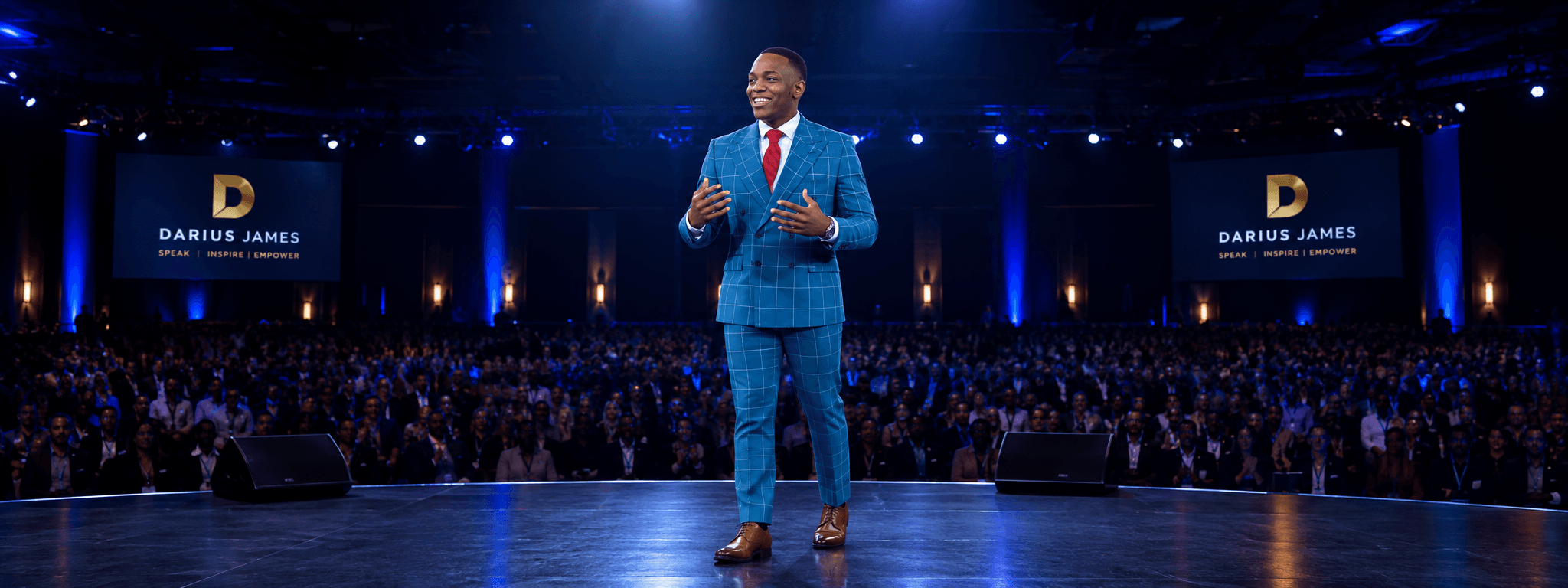
Darius James is a youth motivational speaker who delivers school assembly and keynote programs for middle schools, high schools, and K-12 districts across the United States. He grew up in Ypsilanti, Michigan, served 8 years in the U.S. Army, and became a CEO before the age of 30. Learn more about Darius →
Book Darius for Your School
School assemblies, graduation keynotes, Red Ribbon Week programs, and leadership events. Submit an inquiry — response within 2–3 business days.
Submit a School InquiryMore Resources

Ready to TransformYour School?
Tell us what your school needs right now. Fill out our discovery form below so we can learn how we can best support your school.
Start the Conversation→Or email us directly: bookings@dariusjames.org